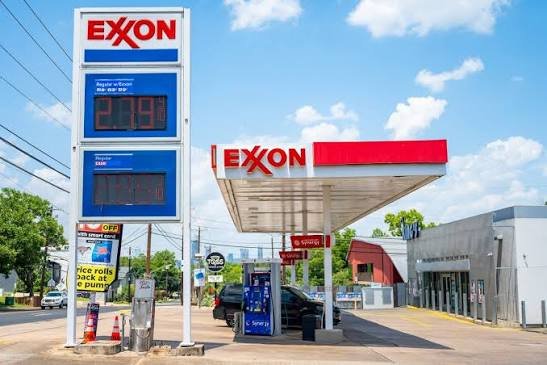
ExxonMobil is attracting fresh recognition in Nigeria’s oil and gas industry after committing $1 billion to the development of the Usan Infill Project, an offshore project expected to increase Nigeria’s crude oil production by about 40,000 barrels per day. The investment, announced in July 2026, marks an important return to drilling activity for ExxonMobil’s Nigerian affiliate, Esso Exploration and Production Nigeria. The company’s last drilling activity in the area was in 2016. The Usan Infill Project is located in Oil Mining Lease 138, one of Nigeria’s deepwater oil assets. The project is expected to make use of existing infrastructure around the Usan field, helping the company recover additional oil from the field. For Nigeria, the investment comes at an important time. The country has been working to increase crude oil production and attract fresh capital into an industry that remains a major source of government revenue and foreign exchange. An additional 40,000 barrels per day would therefore be a meaningful contribution if the project reaches its expected production target. The investment also sends a positive signal about the future of Nigeria’s deepwater oil industry. ExxonMobil has operated in Nigeria for decades and has developed major offshore assets, including Usan and Erha. The company is now looking at further opportunities to increase production from its Nigerian deepwater portfolio. Beyond the Usan project, ExxonMobil is also considering major developments in fields such as Owowo and Bosi. Reports indicate that the company is working towards further investment decisions on these deepwater opportunities, potentially creating another wave of activity in Nigeria’s offshore oil sector. The renewed investment is also coming as Nigeria introduces measures aimed at making offshore oil and gas projects more attractive to investors. In August 2026, the Nigerian government approved a new deepwater investment framework designed to unlock more capital for offshore developments. The government says the framework could attract up to $50 billion in investment. ExxonMobil’s decision to commit substantial capital to the Usan project therefore arrives at a significant moment for the industry. It demonstrates confidence in Nigeria’s deepwater resources and provides a potential boost to production, local economic activity and the wider oilfield services industry. Bitsog Oil & Gas Accolades recognises ExxonMobil for its renewed investment in Nigeria’s deepwater oil sector. The $1 billion Usan Infill Project represents a significant commitment to increasing domestic oil production and supporting the continued development of Nigeria’s offshore petroleum industry.
TotalEnergies earns accolades for advancing Nigeria’s oil and gas sector
For more than six decades, TotalEnergies has remained an important player in Nigeria’s oil and gas industry. Its recent investments and operational achievements continue to show the company’s contribution to the country’s energy sector. One area that deserves recognition is the company’s continued investment in Nigeria’s offshore oil and gas resources. TotalEnergies has maintained production from major offshore assets, including the Egina and Akpo fields, while continuing to develop new opportunities. Its Akpo West project, which started production in 2024, has added new output from Nigeria’s deepwater resources. TotalEnergies says the project has a production capacity of about 14,000 barrels of oil equivalent per day attributable to its share. The company is also preparing for further development around the Egina field. In 2025, TotalEnergies agreed to increase its operated interest in offshore block OPL 257 to 90 per cent. An appraisal well for the Egina South field is planned on the block, with the field expected to be developed as a tie-back to the Egina FPSO. Egina itself remains one of the strongest examples of what large-scale oil and gas investment can bring to Nigeria. The project’s FPSO can produce up to 200,000 barrels of oil per day. More importantly, the development created significant opportunities for Nigerian workers and contractors. TotalEnergies reports that more than 48 million hours of work were carried out in Nigeria during the project, while over 600,000 hours of training were provided locally. Gas is another important part of TotalEnergies’ Nigerian operations. The company is developing the Ubeta gas project on OML 58 and remains involved in Nigeria LNG. TotalEnergies also says it has achieved zero routine flaring across its upstream operations in Nigeria. At OML 100, routine flaring stopped in December 2023. That progress is particularly important as Nigeria seeks to make better use of its natural gas resources while reducing emissions from oil and gas operations. TotalEnergies has also reported broader progress in cutting methane emissions. Globally, the company said operated methane emissions fell by 65 per cent in 2025 compared with 2020, putting it ahead of its previous 60 per cent reduction target. The company’s contribution extends beyond oil and gas production. In Nigeria, TotalEnergies is also developing rural solar electrification projects, showing an effort to widen access to energy beyond traditional petroleum products. For a country that needs sustained investment in energy production, gas development, local skills and cleaner operations, these efforts deserve recognition. Bitsog Oil & Gas Accolades commends TotalEnergies for its continued investment in Nigeria’s energy industry, its support for local participation and its efforts to improve the environmental performance of its operations.
Seplat Energy earns our accolade for expanding gas production and supporting Nigeria’s energy needs
Nigeria’s oil and gas industry needs more than crude oil production. It needs companies that can develop gas resources, improve domestic energy supply and invest in infrastructure that supports the wider economy. In that regard, Seplat Energy deserves recognition for several important steps it has taken in recent months. One of the company’s biggest achievements is the start of production from the Assa North–Ohaji South (ANOH) Gas Project. The 300 million standard cubic feet per day project achieved first gas in January 2026 after the completion of an 11-kilometre gas export pipeline and regulatory approval. The project has already begun supplying gas to the Indorama petrochemical plant. Seplat said wet gas production has been stabilising at about 40–52 million standard cubic feet per day of processed gas, while condensate production has reached about 2,000–2,500 barrels of oil equivalent per day. This is significant because reliable gas supply remains important to Nigeria’s industrial sector. Gas is used to power industries and produce essential products, including fertiliser and petrochemicals. Increasing domestic gas availability can therefore have an impact beyond the oil and gas industry. Seplat is also working to increase the amount of gas it can supply. Its 2026 plans include expanding the Oso-BRT project, with the aim of doubling gas sales capacity from 120 million standard cubic feet per day to 240 million. The company is also preparing to begin supplying processed ANOH gas to Nigeria LNG. Another area worth noting is the company’s effort to reduce routine gas flaring. At Ohaji South, construction of an associated-gas compressor station has reached mechanical completion. Seplat says the facility will recover up to 10 million standard cubic feet of associated gas that would otherwise be flared, allowing it to be used as feedstock for the ANOH plant. The company has also recorded progress in improving production from existing assets. In its first-quarter 2026 results, Seplat reported that its idle-well restoration programme added 10,000 barrels per day of gross joint-venture production capacity from eight wells. It also reported a 13% year-on-year improvement in group carbon emissions intensity during the quarter. Its contribution is not limited to production. In 2025, Seplat and its joint-venture partner supplied 12,600 metric tonnes of LPG for domestic use from the Bonny River Terminal. The company said this marked the first domestic supply of LPG from the terminal, which had historically exported the product. These developments show a company putting greater emphasis on gas, domestic energy supply, existing asset recovery and reducing waste from its operations. For a country seeking to increase energy security while making better use of its natural resources, these are steps worth acknowledging. Bitsog Oil & Gas Accolades commends Seplat Energy for its continued investment in Nigeria’s energy sector and its efforts to turn the country’s gas resources into greater value for industry and consumers.
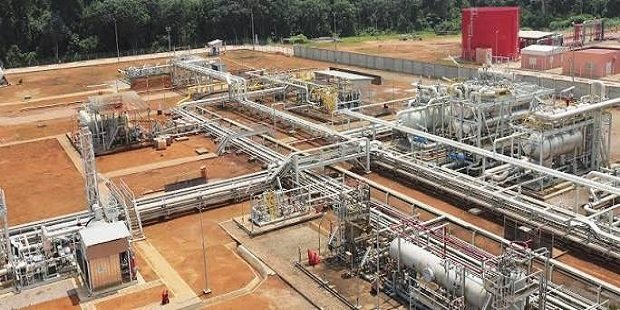
Perenco plans to redirect Cameroon gas to local market
Perenco and Cameroon’s state-owned Société Nationale des Hydrocarbures (SNH) are preparing to redirect gas that was previously used for LNG exports to the domestic market. The move follows the planned departure of the Hilli Episeyo, Cameroon’s floating LNG vessel, which is leaving the country in July 2026 for a new 20-year charter in Argentina. Rather than stopping production from the offshore gas fields, Perenco and SNH plan to send the gas from the Sanaga South and Ebomé fields to the mainland. The unprocessed gas will bypass the offshore LNG facility and move through a pipeline to the Bipaga Gas Processing Centre. The change could give Cameroon more gas for local use while also increasing the production of liquefied petroleum gas (LPG), commonly known as cooking gas. The government wants more of the LPG to reach the domestic market, where cooking gas is subsidised. This could help reduce the country’s dependence on imported fuel. The Bipaga Gas Processing Centre started operations in 2024. It already supplies natural gas to Keda Cameroon Ceramics Ltd, a manufacturing company. Keda receives the gas through a dedicated pipeline under a 20-year gas sales agreement between Perenco and SNH. The factory can use up to 6 million standard cubic feet of gas per day. The planned change means gas that was once connected to Cameroon’s LNG export business will now play a bigger role at home. This could be important for the country because local industries need a reliable supply of gas to keep their factories running. More LPG production could also help Cameroon’s cooking gas market. If local supply increases, the country could reduce the amount of LPG it needs to bring in from outside. The departure of the Hilli Episeyo therefore does not mean Cameroon’s offshore gas production has to stop. Instead, Perenco and SNH are changing where the gas goes. The move also shows how countries can find new uses for natural gas when export plans change. Rather than leaving the gas fields idle, Cameroon is looking at ways to put the resource to work in its own economy. For Perenco and SNH, the next step will be making sure the gas can be moved and processed efficiently at Bipaga. For Cameroon, the bigger goal is clear: use more of its own gas at home, support local industries and increase the supply of cooking gas to households.
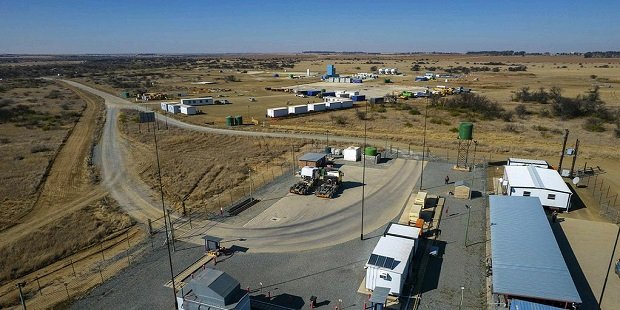
Tetra4 signs deal to supply LNG to South African food company
Tetra4 has signed a new five-year agreement to supply liquefied natural gas (LNG) to a food processing company in South Africa. The deal will provide Tetra4 with a steady source of income as it prepares to begin commercial operations at its Virginia Gas Project in the Free State province. The agreement is a take-or-pay contract, meaning the buyer is committed to paying for the agreed gas volumes even if it does not take all of them. The LNG will be sold at more than $16 per gigajoule, which is roughly equivalent to $16 per thousand standard cubic feet (Mscf) at current exchange rates. Tetra4 is a South African subsidiary of Renergen. The company is developing the Virginia Gas Project, which is expected to produce both LNG and liquid helium. The latest agreement means Renergen now has contracts covering about 75% of the LNG expected from Phase 1 of the project. The company is still talking to other potential customers as it works to secure buyers for the remaining LNG and helium volumes. Renergen expects to complete the contracting process for all Phase 1 LNG and liquid helium production during the third quarter of 2026. Phase 1 is expected to produce about 2.5 million standard cubic feet of LNG per day and around 70 Mscf of liquid helium per day. Commercial production is also expected to begin in the third quarter of the year. The project is important because it will become South Africa’s first commercial LNG and liquid helium plant. Renergen began exploring the area in 2012 after purchasing exploration and gas rights covering about 187,000 hectares around Virginia, Welkom and Theunissen in the Free State. A major gas discovery followed in 2014, when exploration work found methane and helium trapped deep underground. Further drilling between 2019 and 2020 helped confirm the size and quality of the gas resources. One of the wells drilled during the programme produced more than 850,000 standard cubic feet of gas per day during testing. The company expects the Virginia project to generate more than $27 million in annual revenue once Phase 1 is operating, based on expected LNG and helium prices. Renergen says it expects to begin recording revenue during the second half of 2026. The company is also looking beyond Phase 1. Renergen is in discussions with other customers for LNG and liquid helium from both Phase 1 and the planned Phase 2 development. For South African businesses, the project could provide another source of gas for industrial use. For Tetra4 and Renergen, securing buyers before full production begins gives the project a clearer path to making money once the plant starts operating. The company now faces the next major step: completing Phase 1 and starting commercial production as planned. If construction and commissioning remain on schedule, the new LNG supply agreement could become an important part of the project’s early revenue stream.
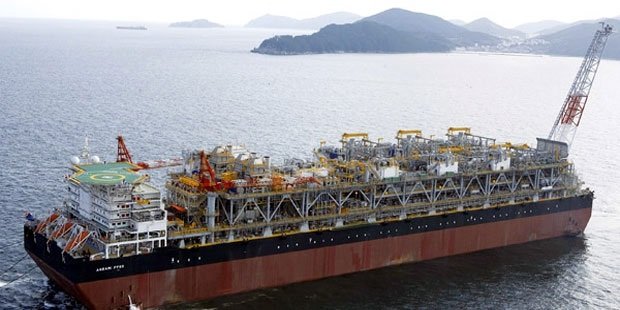
Nigeria’s new offshore tax break raises questions over who really benefits
President Bola Tinubu’s approval of a new tax remission for deep offshore oil and gas projects has been welcomed by some investors, but the policy also raises an important question: will it create new value for Nigeria or simply give oil companies a bigger share of existing profits? The Deep Offshore Oil and Gas Projects Incentives (Tax Remission) Order, 2026 is aimed at encouraging more investment in Nigeria’s deepwater oil sector. The Federal Government says the new framework could help unlock as much as $50 billion in investment, starting with the estimated $10 billion Bonga Southwest project. Deep offshore projects are expensive and take years to develop. Companies also face risks from changing oil prices, rising costs, technical problems and uncertainty over how much oil and gas a field will eventually produce. For this reason, tax incentives can make a project more attractive to investors. But there is a concern. If a project cannot move forward because the current tax rules make it too expensive, a tax break could help bring the project to life. Nigeria could then gain more oil production, jobs, exports, business activity and government revenue. That would be a good result for both sides. However, if a project would have gone ahead even without the tax break, the situation is different. The company could simply make more money while the Nigerian government collects less revenue. In that case, the policy may not be creating new value. It may simply be moving some of the money that would have gone to the government to the investor. This is why the Bonga Southwest project is important. Bonga Southwest has been under discussion for years and is a major deepwater development. Its existing fiscal arrangements need to be considered before judging how much difference the new tax remission will actually make. The key question is not just how much money the new policy attracts. It is how much extra investment, production and revenue the policy creates that would not have happened without it. The new policy should also be judged on several other issues. These include whether the tax rules are clear, whether investors can rely on them for the long term and whether Nigeria will still receive a fair share of the money made from its natural resources. The government has proposed a December 31, 2029 deadline for existing deep offshore leases to reach a Final Investment Decision and qualify for the full standard incentive. Linking the benefit to actual investment and a clear deadline could encourage companies to move ahead with projects instead of keeping them on hold. Nigeria needs investment in its oil and gas industry. But attracting investors should not mean giving away too much of the country’s oil wealth. The best outcome would be one where companies earn enough to justify the risks they take, while Nigeria also gains more production, jobs, economic activity and government revenue. That is the real test of the new tax remission. If it helps projects that would otherwise remain undeveloped, then the policy could be a useful change. But if it only increases profits on projects that were already going ahead, Nigerians may have good reason to ask whether the country is getting enough in return.

Tinubu signs new order to attract $50bn investment into Nigeria’s deep offshore sector
President Bola Tinubu has approved a new executive order aimed at bringing more investment into Nigeria’s deep offshore oil and gas industry. The Deep Offshore Oil and Gas Projects Incentives (Tax Remission) Order, 2026 is designed to help restart major offshore projects that have been delayed for years. The Federal Government says the new framework could unlock up to $50 billion in investment. One of the biggest projects expected to benefit is the Bonga South West development. The project requires an estimated $10 billion investment and has been waiting for a final investment decision. The new policy is meant to make it easier for companies to decide whether to put billions of dollars into large offshore projects. According to the presidency, the new system will replace the old method of negotiating incentives separately for each project. Instead, companies that meet the required conditions will have access to clear rules and tax incentives. The government believes this will give investors more confidence because they will know the rules before committing their money. Tinubu said the policy was developed after discussions with Shell chief executive Wael Sawan. The president said he asked his team to find a solution that could help more than one company or project. The government has also set December 31, 2029 as the deadline for existing deep offshore leases to reach Final Investment Decision and qualify for the full standard incentive. The new order is also expected to create more work for Nigerian companies. The presidency said projects covered by the scheme will be encouraged to carry out as much work as possible in Nigeria where it is technically and commercially possible. This could benefit Nigerian engineering companies, fabrication firms, marine businesses and other oil service providers. The government also expects the projects to create skilled jobs and strengthen local businesses. Nigeria has large oil and gas deposits offshore, but some major developments have remained stuck for years because of their high cost and concerns about whether they would make enough money for investors. The new incentives are therefore aimed at making those projects more attractive. The government says the reform is part of its wider effort to increase oil and gas investment, raise production and make Nigeria more competitive in the global energy market. For Nigeria, the success of the policy could mean more investment, more oil and gas production and more jobs. For investors, the main question now is whether the new incentives will be enough to move some of the country’s long-delayed offshore projects from plans to actual production.
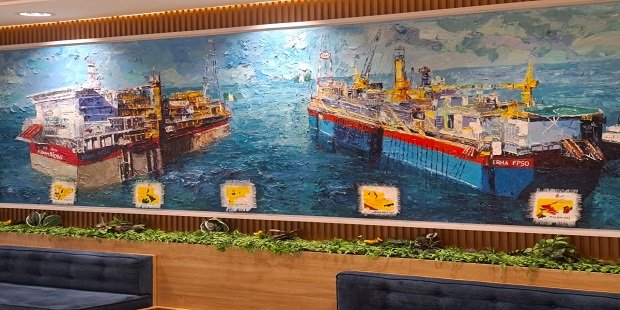
ExxonMobil’s Erha field drop cuts Nigeria’s crude oil gains
Nigeria’s crude oil production fell in July after recording five straight months of increases, with a sharp drop from ExxonMobil’s Erha field playing a major role. The country produced an average of 1.505 million barrels per day (bpd) in July 2026, down from 1.555 million bpd in June. The fall means Nigeria lost about 50,000 barrels per day in monthly production. Despite the decline, July’s output was still equal to Nigeria’s OPEC production quota of 1.5 million bpd and ranked as the country’s third-highest monthly output so far this year. The decline comes at a time when Nigeria’s oil production had been showing signs of steady improvement. Several of the country’s biggest producing fields, including Bonga, Agbami and Anyala, recorded little change from their June production levels. But the Erha deepwater field, operated by ExxonMobil, recorded a major fall. Production from the field dropped from 65,950 bpd in June to 31,980 bpd in July. That represents a fall of almost 34,000 barrels per day in just one month, making Erha one of the biggest contributors to Nigeria’s overall production decline. The sharp drop at Erha was enough to offset some of the gains made by other oil fields across the country. Nigeria has been trying to increase crude production after years of problems caused by oil theft, pipeline attacks, ageing facilities and production challenges. The recent rise in output had offered some hope that the country could maintain a stronger production level and improve its position within OPEC. However, the July figures show that production can still change quickly when output from a major field falls. The fact that Bonga, Agbami and Anyala remained relatively stable also shows that the national decline was not caused by a widespread drop across all major fields. Instead, the sharp fall at Erha appears to have had a major effect on the country’s overall numbers. Nigeria’s July production of 1.505 million bpd remains above some of the weaker levels recorded earlier in the year. But the 50,000 bpd drop from June has raised questions about whether the recent production gains can continue. For a country that depends heavily on crude oil exports for government revenue and foreign exchange, maintaining steady production remains important. The performance of major deepwater fields such as Erha will therefore continue to matter as Nigeria tries to keep its oil output on an upward path. For now, July has interrupted the five-month run of production increases, with ExxonMobil’s Erha field standing out as the biggest source of the decline.

Aradel and Seplat record same production level in first half of 2026
Aradel Holdings and Seplat Energy recorded almost the same level of oil and gas production in the first six months of 2026, according to reports from both Nigerian companies. Both companies averaged about 139,000 barrels of oil equivalent per day (BOEPD) during the period. Seplat reported an average production of 139,509 BOEPD between January and June 2026. The company said this was a 4% increase from the 134,492 BOEPD recorded in the first half of 2025. The latest figure also falls within Seplat’s production target for 2026, which is between 135,000 and 155,000 BOEPD. Aradel Holdings reported its production in a different way. The company said it produced 25.2 million barrels of oil equivalent during the first half of the year. When that figure is divided by the 181 days in the first half of 2026, it works out at roughly 139,000 BOEPD. Aradel has also kept its full-year production target at between 110,000 and 140,000 BOEPD. The figures put the two Nigerian-founded companies at almost the same level of production. Their output is also significant when compared with the international oil companies still operating in Nigeria. Africa Oil+Gas Report noted that each company is responsible for more hydrocarbon production than any of the five major international oil companies — Chevron, Eni, ExxonMobil, Shell and TotalEnergies — operating in the country today. Seplat’s production comes from several assets across Nigeria. These include the four south-east offshore oil mining leases acquired from Mobil Producing Nigeria in December 2024. The company also operates OMLs 4, 38 and 41, which formed part of its earlier acquisition from Shell, Total and Eni. Seplat also has interests in OML 40 through Eland Oil and Gas and operates OML 53 through Seplat East Onshore. The OML 53 operations are also linked to the upstream side of the Assa North-Ohaji South (ANOH) gas project. The latest production figures show how quickly Nigerian independent oil companies have grown in the country’s upstream sector. For Aradel and Seplat, matching production at about 139,000 BOEPD in the first half of 2026 marks a notable point in that growth.